
Southlake City Directory Collection Shelf
There is no confirmed standalone Southlake city directory run. The practical shelf is regional. Texas State Library and Archives Commission lists Fort Worth and Fort Worth Suburban volumes, while Fort Worth library collections, the Tarrant County Archives, and UT Austin's Briscoe Center offer related ways to pursue a name or address. Southlake Public Library is a referral point rather than a published directory repository. Ask its reference staff to check the catalog, interlibrary loan options, local yearbooks, newspapers, oral histories, and any Fort Worth Suburban holdings.
| Collection | Years | Where Held | Access |
|---|---|---|---|
| Fort Worth city directories | 1877-1989, with listed gaps | TSLAC, Fort Worth Library, UT Briscoe, databases | Research-room and library/database routes |
| Fort Worth Suburban directories | 1963-68; 1970-79; 1981-82; 1985; 1987-88; 1990-91; 1993 | TSLAC and library/database referrals | Check each volume for Southlake-area entries |
| Polk Fort Worth directories | 1959, 1963, 1965, 1967-70, 1972, 1974-76, 1978, 1981, 1991 | UT Briscoe and partner databases | Publisher and geographic metadata |
| Tarrant Archives historical holdings | Series-specific | Tarrant County Archives | Directories, maps, school census, probate, and biographical leads |
| Southlake Historical Society | Twentieth and twenty-first century material | Society archives and exhibits | Request availability and source citations |
The distinction matters. A Fort Worth title can be valuable without proving that every Southlake household was covered. Record the volume title, year, publisher, page, and the library or database where it was consulted. A missing name may reflect noncoverage, a changed address, a post-office label, or a gap in publication.
Southlake City Directories Have Gaps
TSLAC's Fort Worth list is detailed, but it is not a citywide Southlake roster. It includes individual Fort Worth runs from 1877 through 1989, with interruptions in the series. Its Suburban list starts with 1963-68 and continues in selected runs through 1993. That suburban shelf is the most plausible regional route for a Southlake-area listing, yet inclusion must be checked on the actual pages.
The exact Fort Worth list is 1877; 1878-79; 1885-86; 1892-93; 1894-95; 1895-96; 1896-97; 1899-1900; 1902-03; 1904-05; 1905-06; 1907-08; 1909-10; 1911; 1920; 1922; 1923; 1928; 1930; 1932; 1933-34; 1936-37; 1938-39; 1940; 1942; 1943; 1945; 1947; 1949; 1950; 1952; 1953-54; 1955; 1956; 1957; 1958; 1959; 1960; 1961; 1962; 1963; 1964; 1965; 1967; 1969; 1970; 1971; 1972; 1973; 1974; 1975; 1976; 1977; 1978; 1979; 1981; 1982; 1985; 1986; 1987-88; and 1989.
UT Briscoe identifies R.L. Polk & Co. as publisher for selected Fort Worth volumes. Its named coverage includes Fort Worth and several nearby suburbs, including Forest Hill, Haltom City, Lake Worth, North Richland Hills, River Oaks, and White Settlement. Southlake is not established by that metadata. Treat Polk information as a way to identify and request a volume, not as proof of coverage.
For a visual starting point, the TSLAC directory-run list shows the Fort Worth and suburban catalog information used for this search. The capture helps distinguish a documented run from a guessed year.
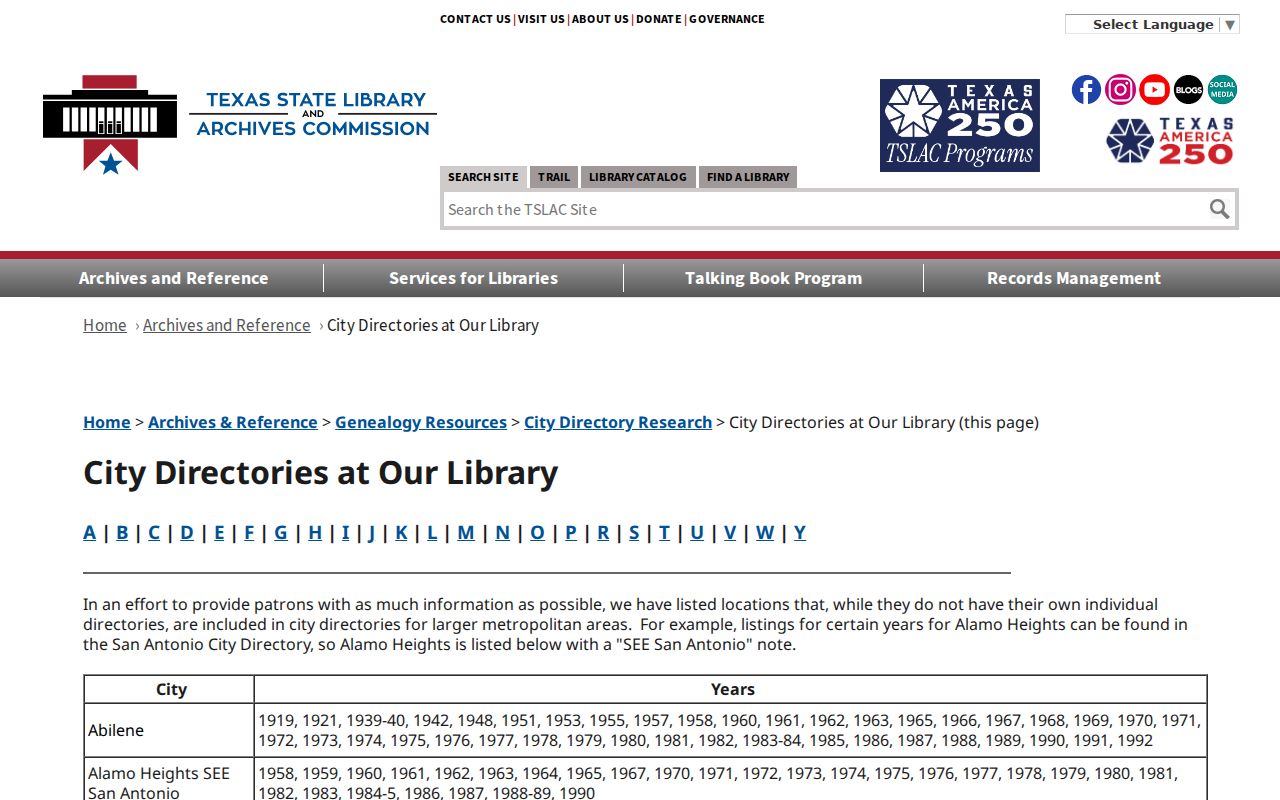
Use the list to choose a specific year, then ask the holding library whether the volume is available in print, microform, or a licensed database. Do not infer a complete sequence where the list shows gaps.
How Southlake City Directory Entries Read
A city directory entry is a compact index, not a certified record. TSLAC says that directories commonly give a name, address, telephone, spouse, occupation, and owner or renter status. The usable method is to capture every printed field and the abbreviation key before interpreting it. An owner or renter mark is the directory publisher's classification for that date, not proof of legal title or present occupancy.
| Printed name | Copy spelling, initials, suffixes, and any alternate form exactly as printed. |
|---|---|
| Address and phone | Capture the street number, street spelling, telephone, and page reference. |
| Family notation | Note spouse names, widow notation, or a separate household line when present. |
| Work detail | Preserve occupation, employer, business listing, or category only when printed. |
| Status mark | Save owner, renter, residence, or similar notation together with the volume's key. |
- Criss-cross directory
- An address or street-order section that can lead from a property to a listed occupant or phone entry.
- Householder index
- An alphabetical household-oriented listing that may be separate from business listings or reverse pages.
- Abbreviation key
- The volume's explanation of short forms such as residence, renter, or widow notation. Photograph it with the entry.
When a name appears only in a business listing, it documents an association with that listing, not necessarily a home address. A new phone prefix, an abbreviated road name, or a spouse's name can be a better bridge to the next volume than a surname alone.
Southlake City Directory Reverse Route
A criss-cross section starts with the address rather than the name. Locate the street spelling and number, capture the listed occupant and telephone, then turn to the alphabetical section for the same name. Compare the next available volume instead of assuming an annual run. A disappearance can mean a move, a new subdivision, a renumbered street, a different post-office label, or a directory that did not reach that area.
Older Southlake searches often need more than the modern city name. The city profile identifies Old Union and Jellico as historical localities, and mail routes came from Grapevine before incorporation. Search Carroll, Grapevine, Old Union, Jellico, “west of Grapevine,” and road terms such as FM 1709 or Southlake Boulevard when the date supports them. A legal description or plat can keep an address trail intact when street wording shifts.
Southlake City Directories Meet Census Years
To trace a household, begin with the first likely directory listing and work one available volume at a time. Preserve the address, family notation, and volume citation. Then pair the directory date with the nearest released federal census, using road landmarks and enumeration geography rather than a modern Southlake filter. The federal 72-year release rule makes census releases through 2020 available, but municipal boundaries and local names changed over time.
- Find a surname, initial, street, or nearby locality in a selected Fort Worth or Suburban volume.
- Save the title, year, publisher, page, abbreviation key, and every printed address field.
- Check the next available directory year for a move, spouse notation, phone change, or disappearance.
- Compare the closest released census with the period's county, road, and locality wording.
- Use deeds, probate, obituaries, cemetery records, or school-census material to resolve a move or death.
Directories date a listing. Deeds date a recorded instrument. Census schedules capture a household at a different moment. Keeping those dates separate avoids turning a useful lead into a claim of continuous residence.
Southlake City Directory Archive Desks
Southlake Public Library can help locate catalog and interlibrary-loan leads. Its reference phone is 817-748-8247, and its public computers and Wi-Fi can support licensed in-library research. For larger regional collections, Fort Worth Public Library's Genealogy & Local History service reports more than 40,000 volumes, about 9,500 microfilm rolls, and about 180,000 microfiche. Its in-person services are by appointment at 817-392-7740 or genlhst@fortworthtexas.gov.
The Fort Worth History Center keeps archive material in the building and can be reached at history@fortworthtexas.gov or 817-392-7740. TSLAC places print and microform directories in its Austin Reference Reading Room; its staff does not perform unlimited phone searches or scan a requested entry. Tarrant County Archives adds historic directories, maps, school census, early probate abstracts, immigrant ledgers, cemeteries, newspapers, oral histories, and biographical files. Ask whether a series has a name index or requires box-level research.
For digitized or catalog gaps, use the Portal to Texas History, Ancestry U.S. City Directories 1822-1995, HeritageQuest, WorldCat, the Library of Congress, and UT Austin Briscoe as research channels. A catalog or database hit identifies a possible source. It does not establish that the volume includes a Southlake household, so confirm the title, year, page, and geographic coverage with the holding institution.
The TSLAC city-directory research guide explains the collection method and access alternatives. It is a useful companion when an online search ends at a catalog record.
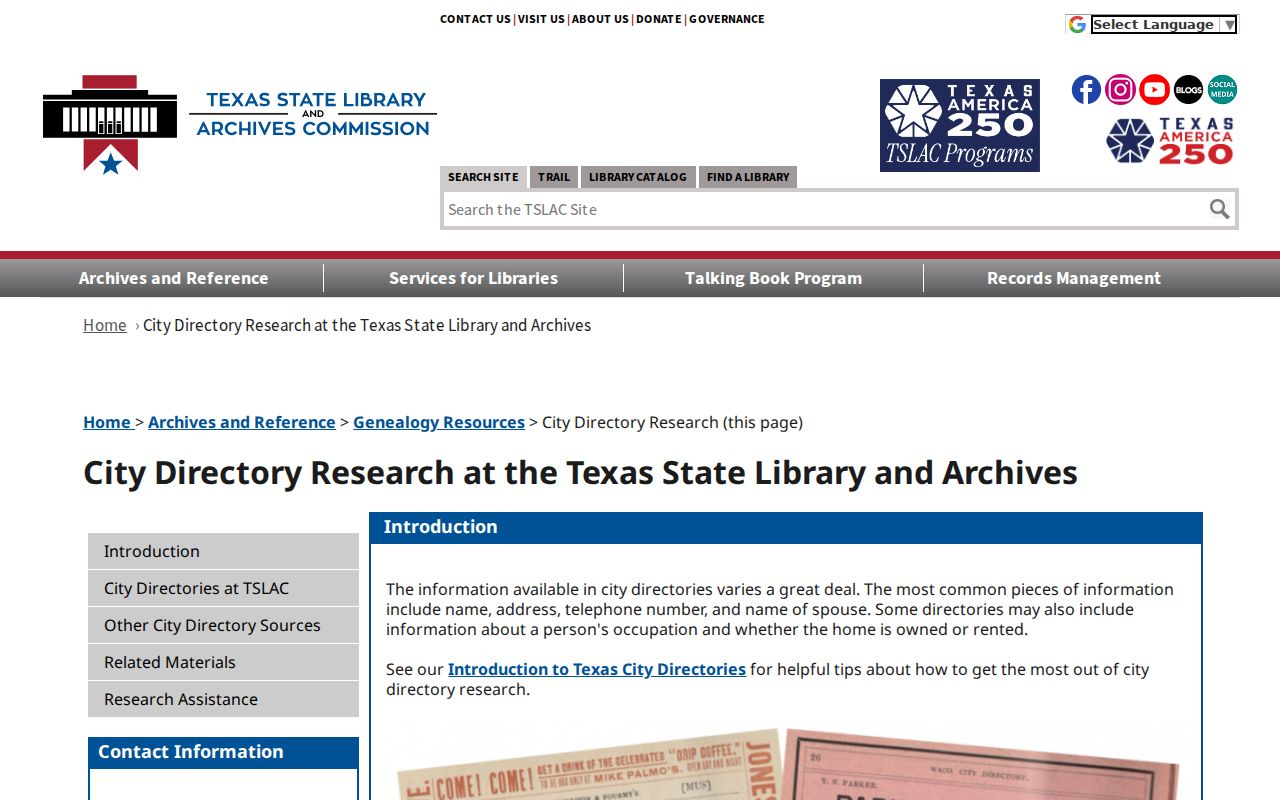
That guide points researchers toward state, university, library, and database routes without promising that a specific Southlake listing is digitized.
Southlake Directory Names Before Incorporation
Southlake was incorporated after a September 25, 1956 vote at Carroll School that passed 30-24. Before that, a family may be recorded through rural Tarrant or Denton County, a Grapevine mailing route, a church or school source, or a place-name variant. The 1876 Tarrant Old Courthouse fire also destroyed most early documentation. An absent early file can be a records-loss issue rather than a failed surname search, so ask the archives about surviving or reconstructed series.
| 1876 | Tarrant's Old Courthouse fire destroyed most early documentation. |
|---|---|
| 1877 | The first Fort Worth directory run listed by TSLAC begins. |
| 1956 | Southlake incorporation was approved at Carroll School. |
| 1963 | The first Fort Worth Suburban run listed by TSLAC begins. |
| 1993 | The last selected Fort Worth Suburban run listed by TSLAC appears. |
The Southlake Historical Society is especially useful for oral histories, exhibits, photographs, newsletters, and place-name context. Its timeline notes a rural landscape that included farms, churches, schools, airstrips, and later growth around Lake Grapevine, SH 114, and FM 1709. These details supply search terms and date context, not a resident roll.
The Southlake Historical Society timeline provides the local history context for these alternate search names.
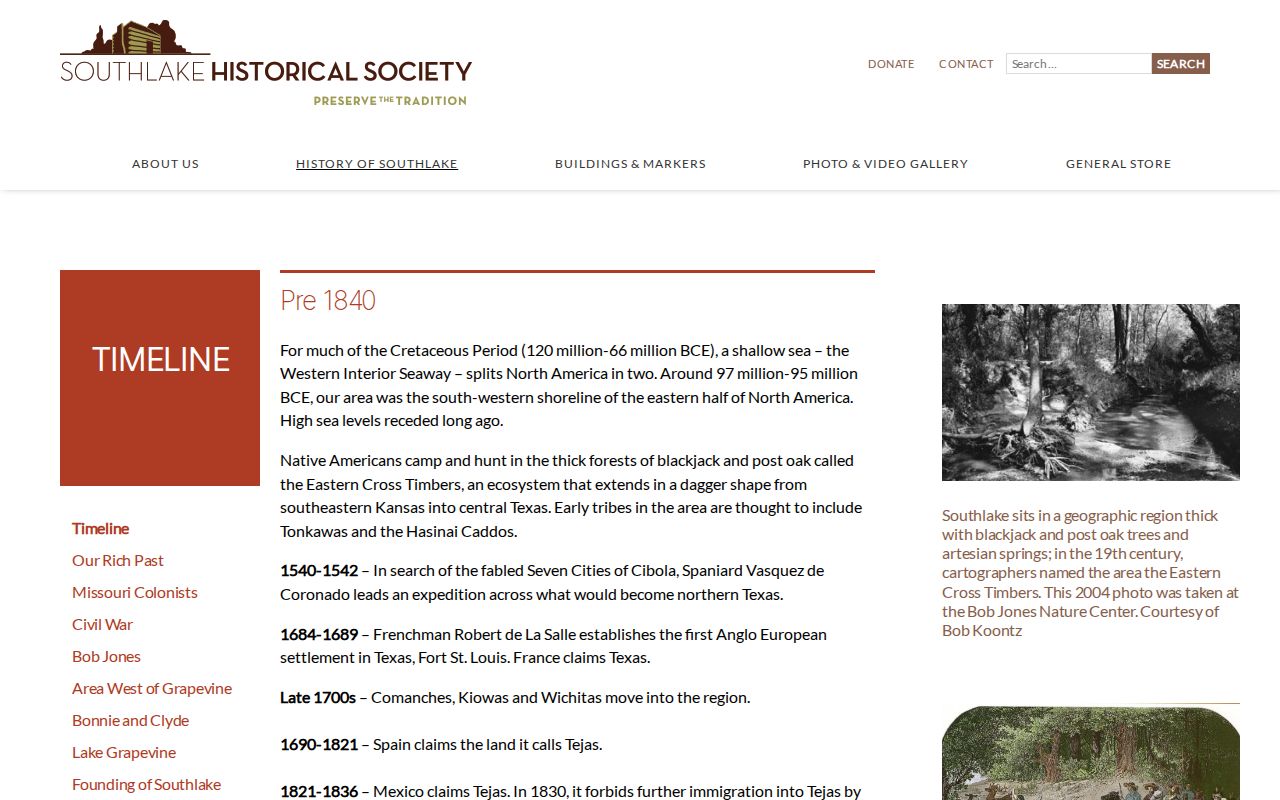
Use the timeline beside a directory citation to decide whether a name should be searched under a rural route, Grapevine-area term, or later Southlake address.
Southlake City Directory Leads Need Verification
A directory hit is a lead to test. For an ownership question, compare the name and date with the appropriate county appraisal card and official-record index. For a household question, compare the address with a released census and the next available directory. For a family endpoint, Tarrant Archives marriage, probate, cemetery, school-census, and immigrant-ledger holdings can supply dated context. Denton County may be the correct jurisdiction for a Southlake-side record.
Southlake Historical Society material, regional newspaper databases, church registers, school yearbooks, and obituaries can add family or place details when available. Cite the image or page, not a memory of a listing. The historical shelf is strongest when each clue retains its own date, locality, and custodian.