
Southlake Previous Resident Record Eras
Previous residents leave different kinds of records in different eras. A current Tarrant Appraisal District card can supply an account, situs address, mailing address, legal description, and instrument link. The Tarrant official-record portal is the next step for a deed chain, but it does not publish its oldest online-index date. Older books and archive series are therefore not optional fallbacks. Southlake also crosses into Denton County, so the parcel's county must be identified before treating a failed Tarrant search as a negative result.
| Source | Years It Covers | Where Held | What It Shows |
|---|---|---|---|
| Tarrant official-record index | Current portal; oldest cutoff not published | Online and County Clerk | Instrument metadata and available images |
| Tarrant deed books and archives | Older county series, by record set | County Clerk and Tarrant Archives | Deeds, plats, liens, and prior instruments |
| TAD parcel and tax records | Current card plus retained tax-year documents | TAD and tax portals | Owner, situs, mailing, value, notices, legal description |
| Fort Worth directories | 1877-1989, with gaps | TSLAC, Fort Worth Library, UT, databases | Potential alphabetical or reverse listing; coverage varies |
| Fort Worth Suburban directories | 1963-68, 1970-79, 1981-82, 1985, 1987-88, 1990-91, 1993 | TSLAC and library referrals | Possible Southlake-area household or phone lead |
| Federal census | Released census years through 2020 | NARA and library databases | Household, age, relationship, and place geography |
| Southlake permits | Current EnerGov service; historical depth unpublished | City portal or public-information request | Construction and inspection chronology |
Start with the date range. A recent ownership question usually begins with the appraisal card and deed index. A mid-century household question may need a regional directory and census comparison. A pre-incorporation question often requires Tarrant or Denton County archives, maps, school sources, or old locality names.
Southlake Previous Residents Start With Parcels
TAD's property search accepts property type and free-text searching. Result examples support owner, address, account, and georeference terms. From the card, preserve the account ID, georeference, situs, owner, Primary Owner Address, legal subdivision, block and lot, neighborhood code, map reference, and instrument link. The situs address identifies the property. The owner's mailing address is a separate field and may be elsewhere.
That difference keeps a house-history search honest. A parcel card can name an owner without showing nonowner occupants, guests, all household members, or a current occupant. Homestead status is evidence that an exemption was claimed, not a full residence history. Denton-side parcels require Denton CAD and the Denton tax route, where the exact live controls were not captured in the research.
Southlake Deed Chain for Past Residents
For a Tarrant-side parcel, use the legal description and instrument link from the appraisal card to search the Tarrant County Clerk's official-record portal. Search the current owner as a grantee, which means the person or entity receiving the property, and open the purchase instrument. Capture its recorded date, document number, grantor, legal description, prior-instrument reference, liens or releases, and the image when available. The grantor is the party transferring the property.
- Find the current parcel card and copy its account, situs, legal description, and linked instrument information.
- Search the current owner or entity as grantee in the official-record index, using a recorded-date range if helpful.
- Read the deed for the seller, prior instrument reference, subdivision, block, lot, or metes-and-bounds wording.
- Search that seller as a grantee before the current deed date to locate the earlier purchase.
- Repeat the sequence, saving each document number and stopping at the clerk or archive when the online trail ends.
- Grantor and grantee
- The grantor transfers an interest. The grantee receives it. The same party can appear in both roles on different deeds.
- Chain of title
- A dated sequence of recorded instruments linking successive transfers of an identified parcel.
- Legal description
- The lot, block, subdivision, metes-and-bounds, or prior-instrument wording that identifies land when street text changes.
The Tarrant Official Records search exposes Quick Search, Advanced Search, recorded-date fields, and index-only or index-plus-OCR choices. Its search term can use grantor, grantee, subdivision, document type, or document number.
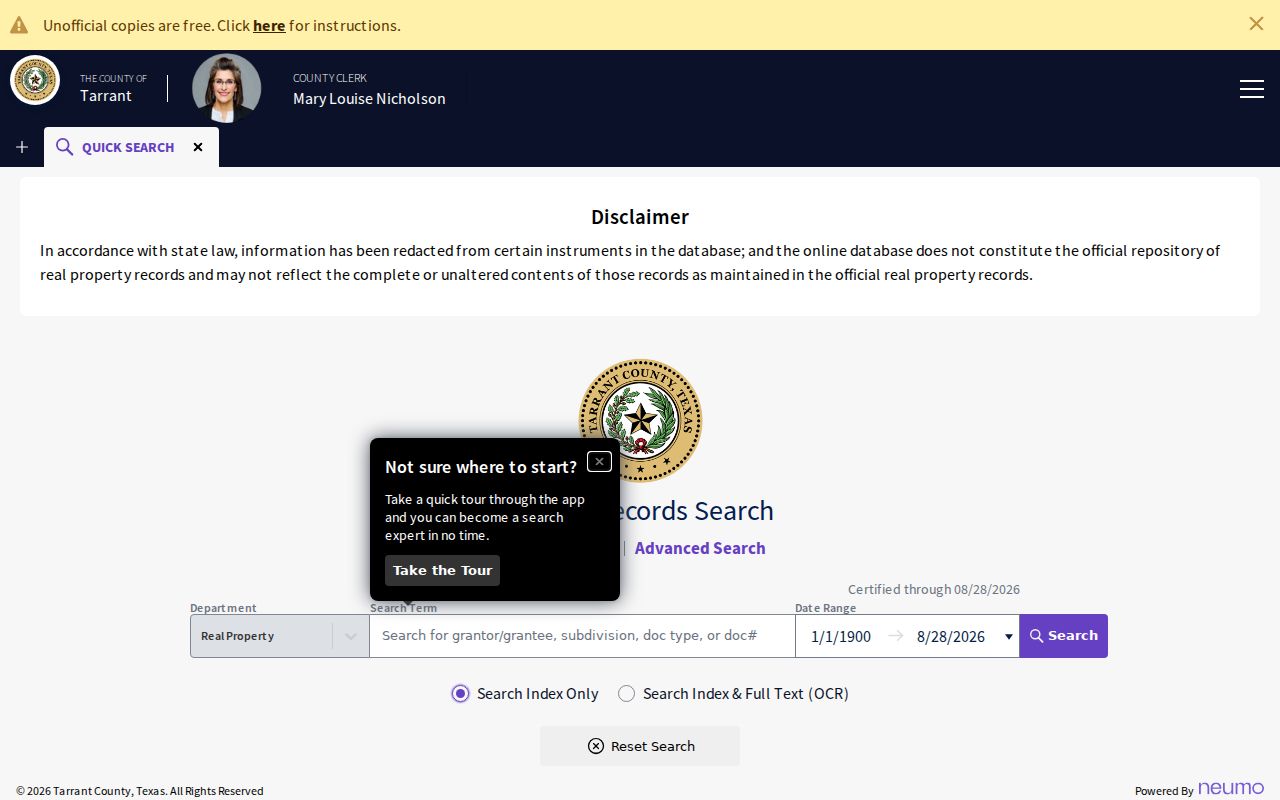
The portal crawl did not state an oldest indexed year or image cutoff. Confirm those limits with the County Clerk rather than adding an assumed starting date to a chain of title.
Southlake Plat Bridge for Older Addresses
When an old deed does not repeat a familiar address, use the plat bridge. TAD's subdivision, block, and lot can lead to the county official-record search, the plat image, and then the deed instrument. A plat explains the lot and block layout. A deed may instead use metes and bounds or point back to a prior instrument. Document numbers and land descriptions are steadier keys than a ZIP code or a later street label.
This method is especially helpful around city growth. Southlake's original incorporation area was 1.62 square miles in 1956, and later annexation expanded the record landscape. The research did not find an official citywide street-renumbering or renaming list. Avoid inventing one. Compare old road maps, subdivision plats, Historical Society material, and period locality names instead.
Southlake Previous Residents in Households
Ownership is only one layer of past residents. A regional directory may place a listed household at an address, while a released census can add age, relationship, and period geography. The Fort Worth series runs from 1877 through 1989 with gaps. Fort Worth Suburban volumes have selected dates from 1963 through 1993. Neither is a confirmed standalone Southlake collection, so check the actual volume before treating an absence as meaningful. The shelves and entry fields are detailed on the Southlake directory book.
- Choose the directory volume closest to the deed or construction date, then search surnames, initials, street variants, and nearby place names.
- If a reverse or criss-cross section exists, start with the address and copy the listed occupant, phone, volume, and page.
- Compare the alphabetical section and the next available volume for moves, spouse notation, or a changed street name.
- Pair the directory year with the nearest released census and use the period's county and road geography.
- Use probate, cemetery, obituary, or later deed material to test a departure or death.
A directory listing dates a listing, not a whole household's continuous stay. A census date, a deed date, and a permit date answer different questions. Record each separately before deciding who lived here before.
Southlake Previous Residents Before 1956
Before incorporation, a Southlake-area family may appear as rural Tarrant or Denton County, Grapevine, Carroll, Old Union, Jellico, or “west of Grapevine.” Jellico had a post office beginning in 1898 and declined after 1907. Old Union was a late nineteenth- and early twentieth-century community. Mail routes came from Grapevine. Those labels are practical index terms, especially when a modern city search finds nothing.
Tarrant County's 1876 Old Courthouse fire destroyed most early documentation. The date given by Tarrant Archives is March 29, 1876. A missing early court or land-related lead can reflect loss rather than a name mismatch. Ask the archive which surviving, abstracted, or reconstructed series applies before drawing a conclusion from a blank online result.
Southlake Previous Resident Archive Fallbacks
When the index ends, use the custodian that holds the older material. Tarrant County Archives offers historic directories and maps alongside marriage material, school census records from 1919-1970, early probate abstracts from 1866-1959, immigrant declarations and oaths from 1878-1895, cemetery records, newspapers, oral histories, and biographical files. Ask whether a name index exists or if a box-level search is necessary. For a Denton-side address, the Denton County Clerk is the real-property and probate custodian.
Southlake Public Library and the Southlake Historical Society are referral channels, not advertised house-history services. Ask for local yearbooks, newspapers, oral-history material, historical maps, and catalog leads. Fort Worth History Center keeps archives in the building, and Fort Worth Public Library adds microfilm and genealogy databases. The research did not identify a formal Southlake house-history guide, so do not expect a guaranteed address packet.
The Tarrant County Archives genealogy holdings show the local record groups that can extend a trail beyond current portals.
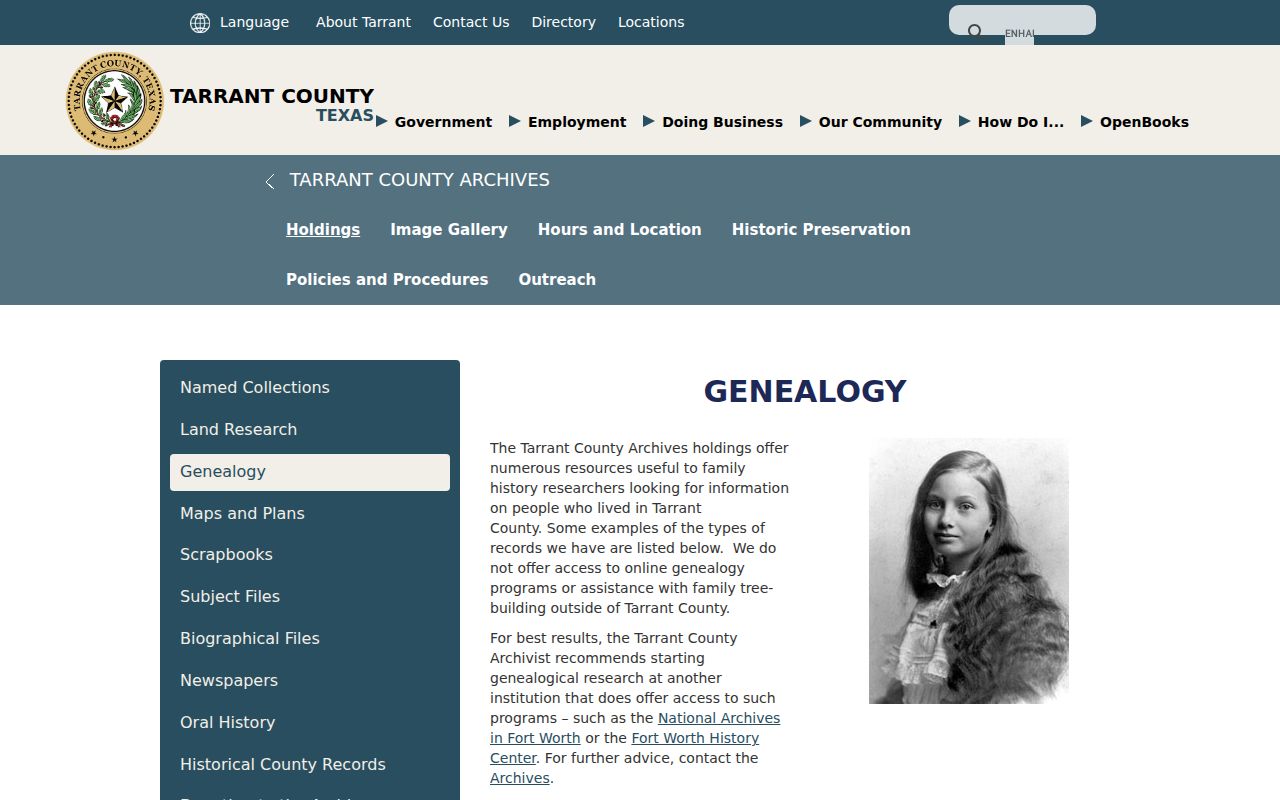
Archive material can supply a new date or locality, but a finding still needs its series, volume or box, page, and retrieval details recorded beside it.
Southlake Permits and Map Limits
Southlake EnerGov can document permit applications, plan review, comments, inspection requests, scheduled dates, results, and corrections. It may require registration, and older or nonpublic material can require a city public-information request. A permit can establish a construction or alteration event. It does not establish a utility customer or prove who occupied the structure. City utility lists are not public household directories.
No Southlake-specific Sanborn fire-insurance map was located. Library of Congress holds nearby Fort Worth sheets for 1885, 1893, and 1910-11, plus Arlington 1917, but those sheets are not maps of a Southlake property. Use them only as nearby urban context, never as evidence about a Southlake house.
Southlake Previous Resident Trail Endpoints
When an earlier owner is deceased, probate, obituary, and cemetery sources can identify published heirs, an executor, or a later address lead. Preserve a probate case number and names only as the permitted record displays them. A blank probate search can mean a Denton case, a small estate, a nonprobate transfer, or a restricted file. The next deed or tax card may provide the property connection that the estate file does not.
Tarrant County also offers a free exact-name Property Fraud Alert covering more than 90 document types. It is useful beside a deed workflow because it can notify a person after matching grantor or grantee activity appears. It is an early warning tool, not prevention, and it does not replace reading the instrument or contacting the Clerk.
The Tarrant County Property Fraud Alert describes the enrollment and official-record follow-up route.
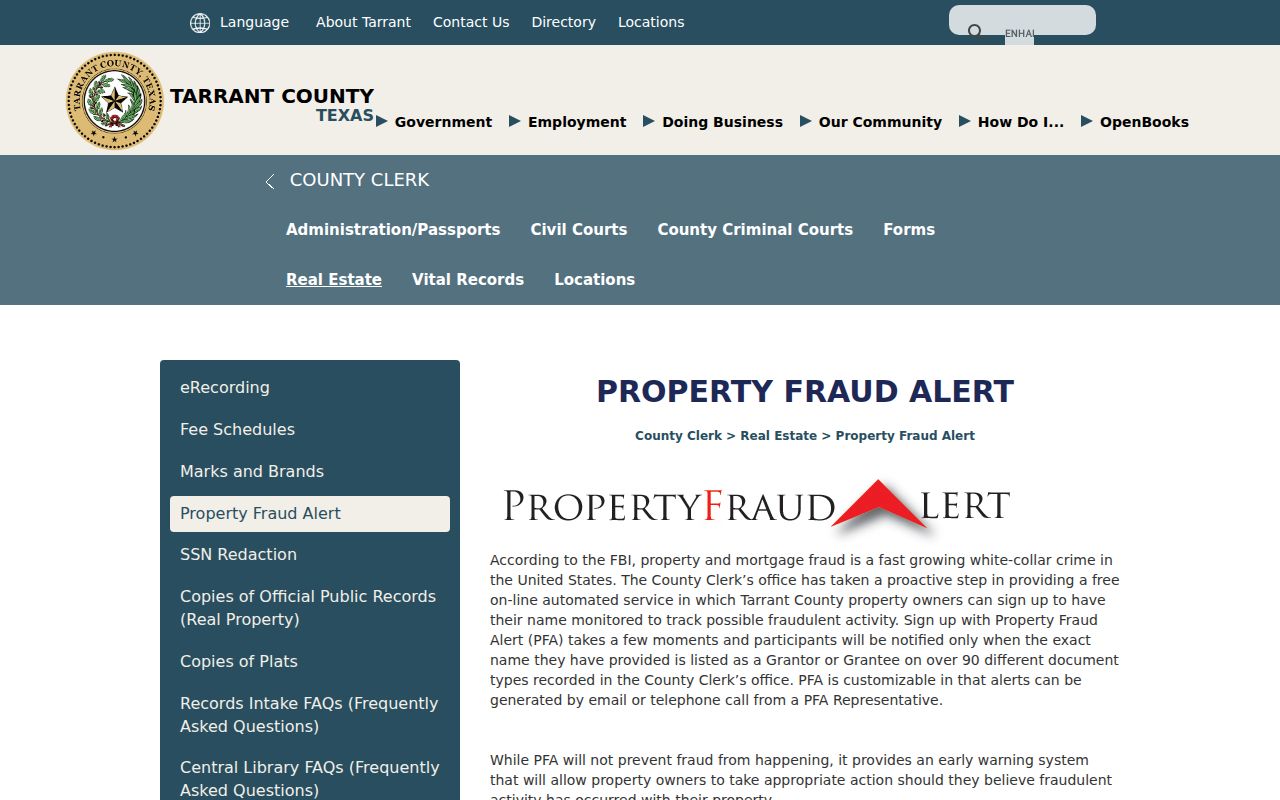
For a past-resident search, the alert is a current-record safety layer. It does not change historical coverage or establish ownership by itself.
Lawful use. Southlake previous-resident research is for house history, family history, and personal curiosity. Do not use a name, address, or record detail to stalk, harass, or harm anyone.